
Fogafale Integrated Coastal Adaptation Pathways (FICAP)
Funafuti Atoll, Tuvalu
Asian Development Bank | 2025–2026
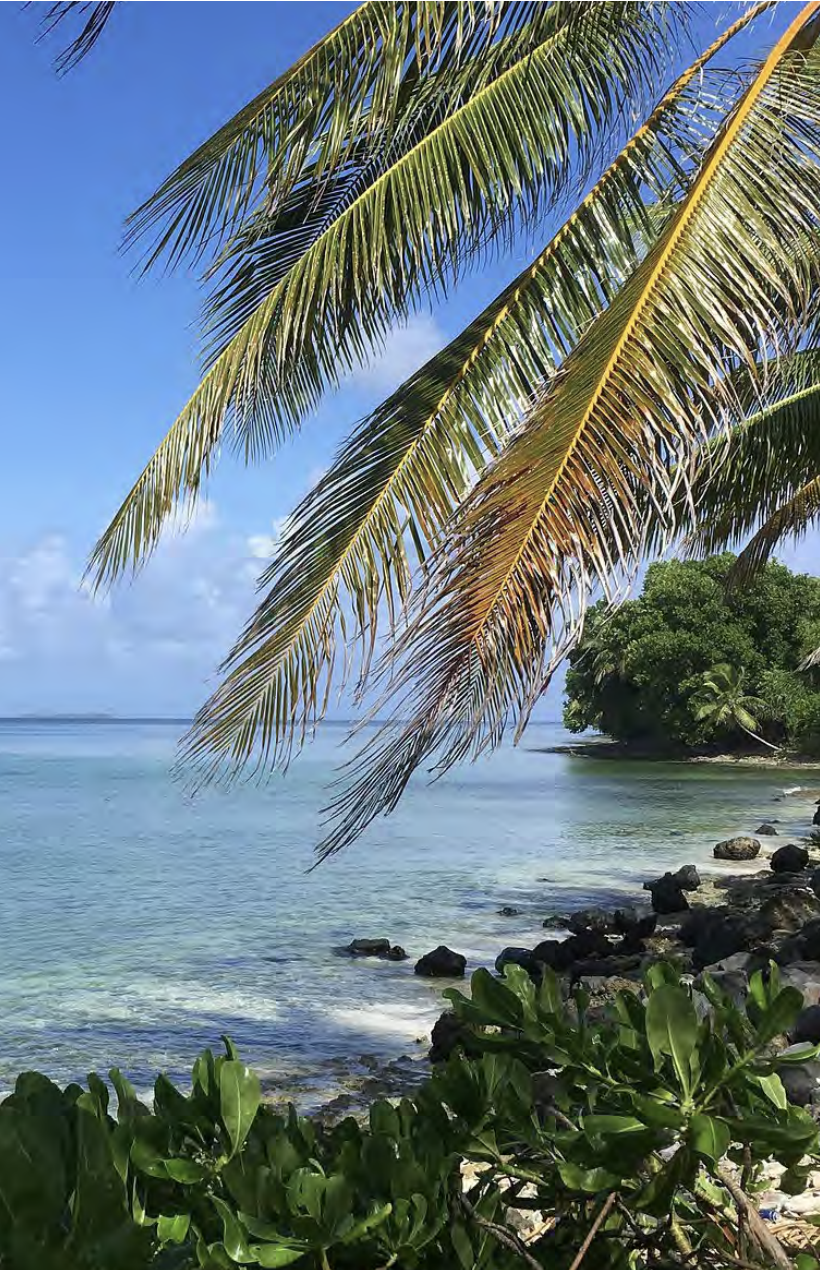
Fogafale, Tuvalu's capital islet, where long-term adaptation planning is addressing increasing coastal and climate risk.
Planning for Fogafale's Long-Term Climate Resilience
Fogafale is the centre of government, infrastructure and economic activity in Tuvalu, yet its narrow, low-lying geography leaves communities and critical assets increasingly exposed to sea-level rise, coastal flooding and extreme events.
Under the Asian Development Bank's Support to Climate Resilient Investment Pathways in the Pacific program, Intercoastal is leading the coastal climate risk assessment for Funafuti Atoll and the subsequent prioritisation of coastal adaptation concepts.
Intercoastal is also leading the overall development of the integrated coastal adaptation strategy, bringing together coastal risk, adaptation options and long-term development considerations to support informed decision-making for the future of Fogafale.
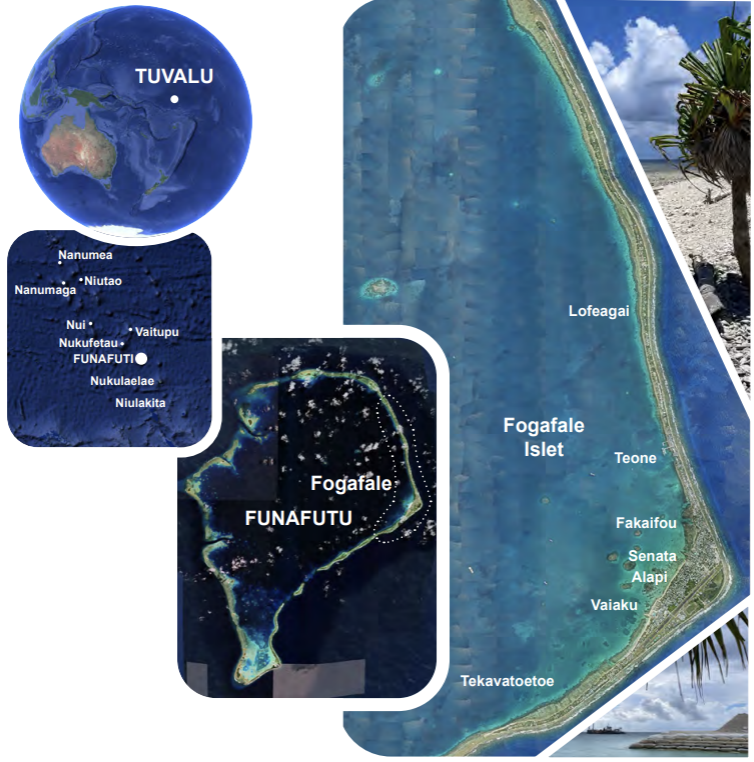
Fogafale islet on Funafuti Atoll is home to Tuvalu's capital and much of the country's critical infrastructure.
Project Highlights
Atoll-scale assessment
Coastal climate risk assessment across Funafuti Atoll
Long-term pathways
Exploring alternative approaches to coastal adaptation
Integrated planning
Connecting coastal risk with land, infrastructure and community development
2025–2026
Project period
Understanding Long-Term Coastal Risk
Climate risk on Fogafale is not only a future concern. Low-lying areas already experience seawater inundation during routine high tides, while sea-level rise is expected to progressively increase the frequency and extent of flooding.
FICAP considers how these changing conditions could affect Fogafale over the long term and how decisions made today may influence future adaptation options.
Rather than focusing on a single coastal protection project, the strategy considers coastal protection, land creation, infrastructure, settlement and governance as interconnected parts of Fogafale's long-term adaptation.
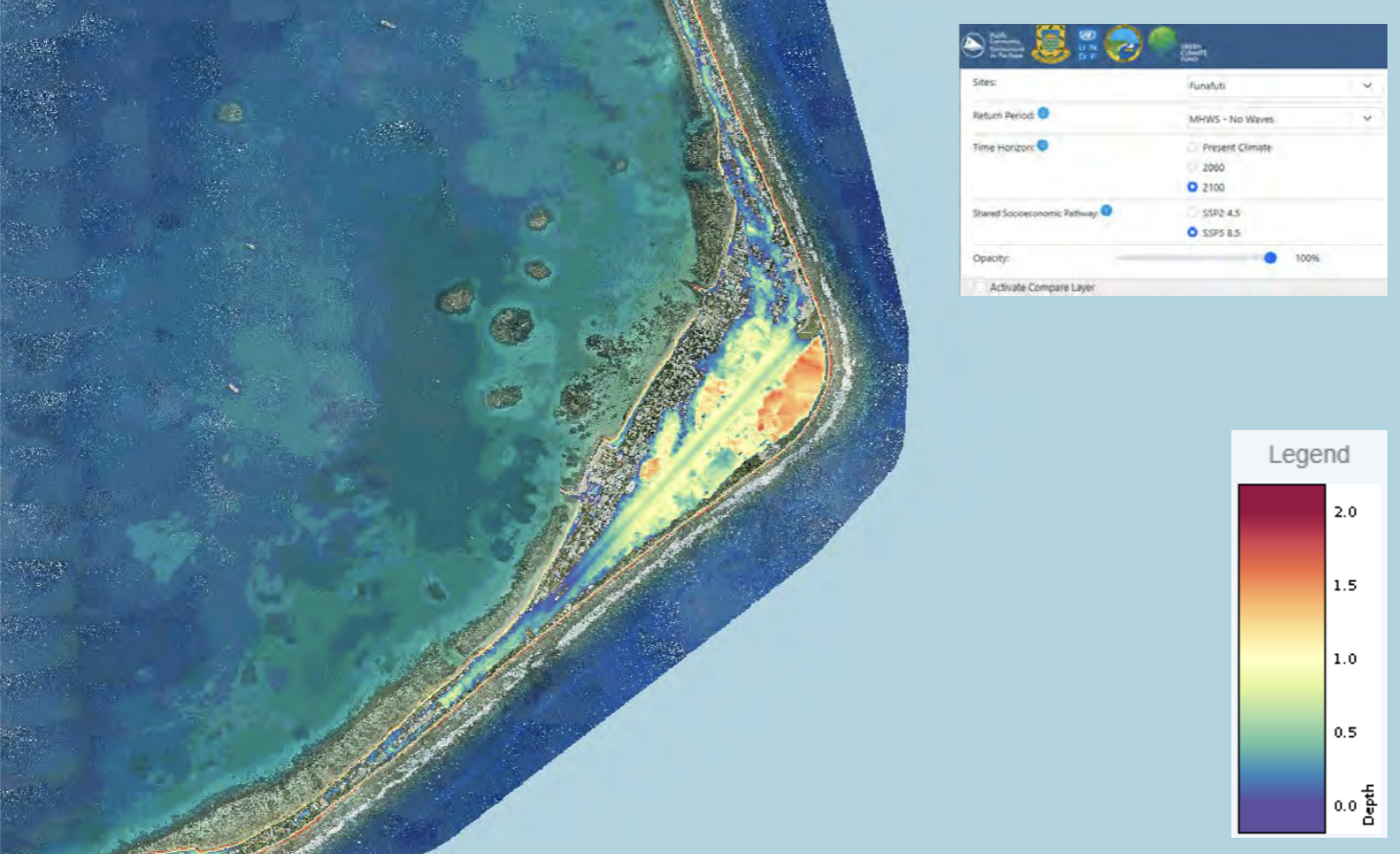
Spatial assessment of potential routine high-tide inundation illustrates the increasing long-term exposure of Fogafale.
From Climate Risk to Adaptation Pathways
FICAP explores alternative pathways for responding to Fogafale's changing coastal risk rather than identifying a single predetermined solution.
The pathways consider different combinations and sequences of coastal protection, land creation, development and community transition. This provides a framework for understanding the trade-offs associated with different approaches and how decisions made at one stage may preserve or constrain future options.
The pathways range from substantial new land creation and progressive relocation onto elevated land, through combinations of protection and development, to maintaining communities largely within Fogafale's existing footprint.
No single pathway is presented as the preferred solution. Instead, the strategy provides evidence and decision guidance to support the Government of Tuvalu in determining how adaptation may progress over time.
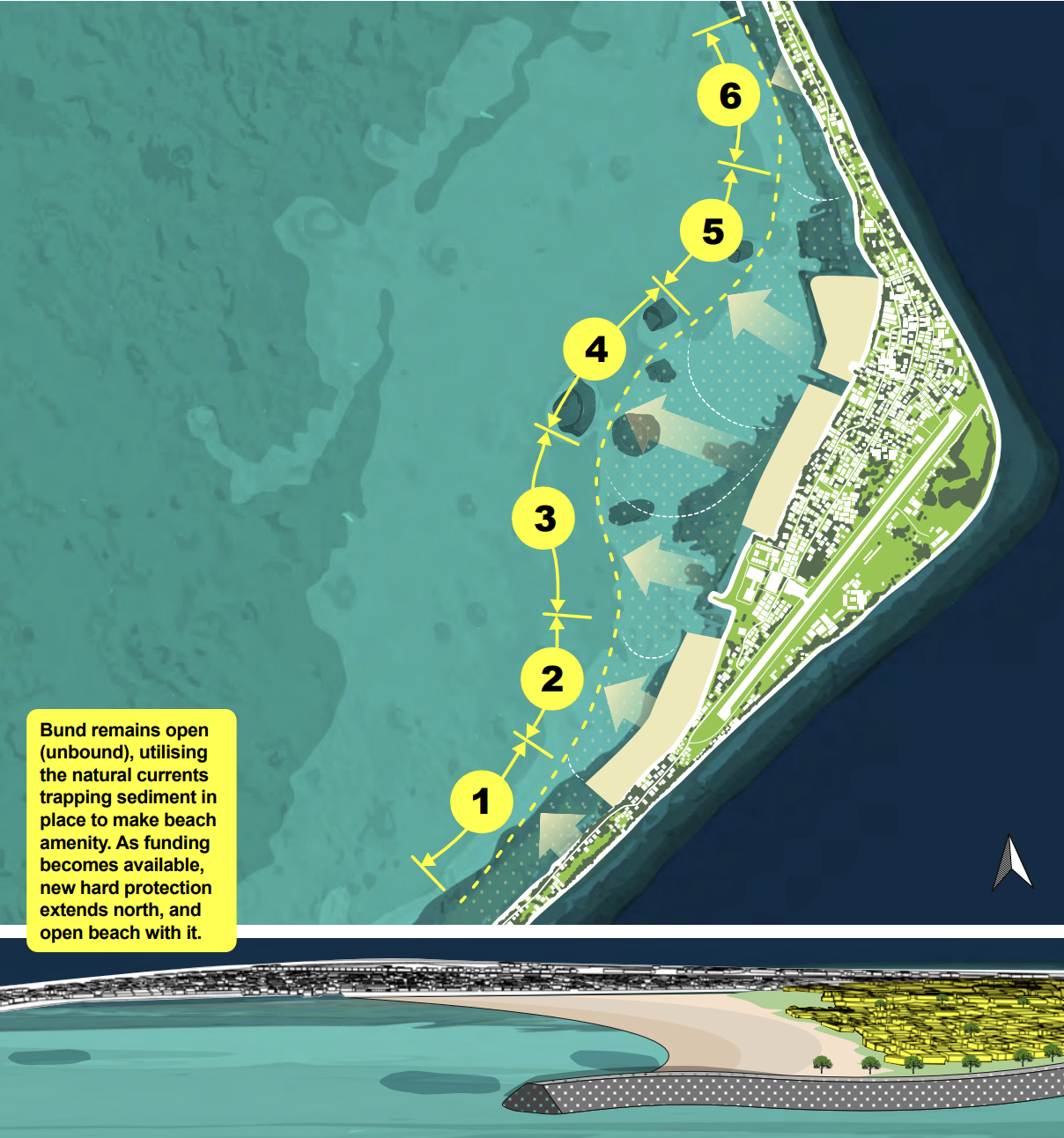
One of the adaptation pathways explored through FICAP, examining progressive land creation and the long-term consolidation of settlement on elevated land.
Supporting Long-Term Adaptation Decisions
FICAP brings climate risk, coastal engineering and long-term development planning together within a single decision framework.
The work is intended to help the Government of Tuvalu understand the implications of different adaptation choices, identify where decisions may create long-term commitments or preserve future flexibility, and provide development partners with clearer entry points for supporting adaptation investment.
By connecting coastal climate risk with spatial adaptation pathways, the strategy provides a framework for moving beyond individual projects towards a coordinated, long-term approach to the resilience of Tuvalu's capital.
Intercoastal's Role
Intercoastal is leading the coastal climate risk assessment for Funafuti Atoll and subsequent prioritisation of coastal adaptation concepts.
The team is also leading development of the overall integrated coastal adaptation strategy, bringing together technical coastal assessment and longer-term adaptation planning to support resilient investment and decision-making for Fogafale.
Project Details
Client: Asian Development Bank (ADB)
Program: TA-6683 REG – Support to Climate Resilient Investment Pathways in the Pacific
Location: Funafuti Atoll, Tuvalu
Project period: 2025–2026
Services: Climate Adaptation & Resilience · Coastal Modelling & Investigations · Coastal Engineering
