
Tuvalu Long-Term Adaptation Plan Preliminary Feasibility Study
Funafuti, Tuvalu
United Nations Development Programme | 2023–2025
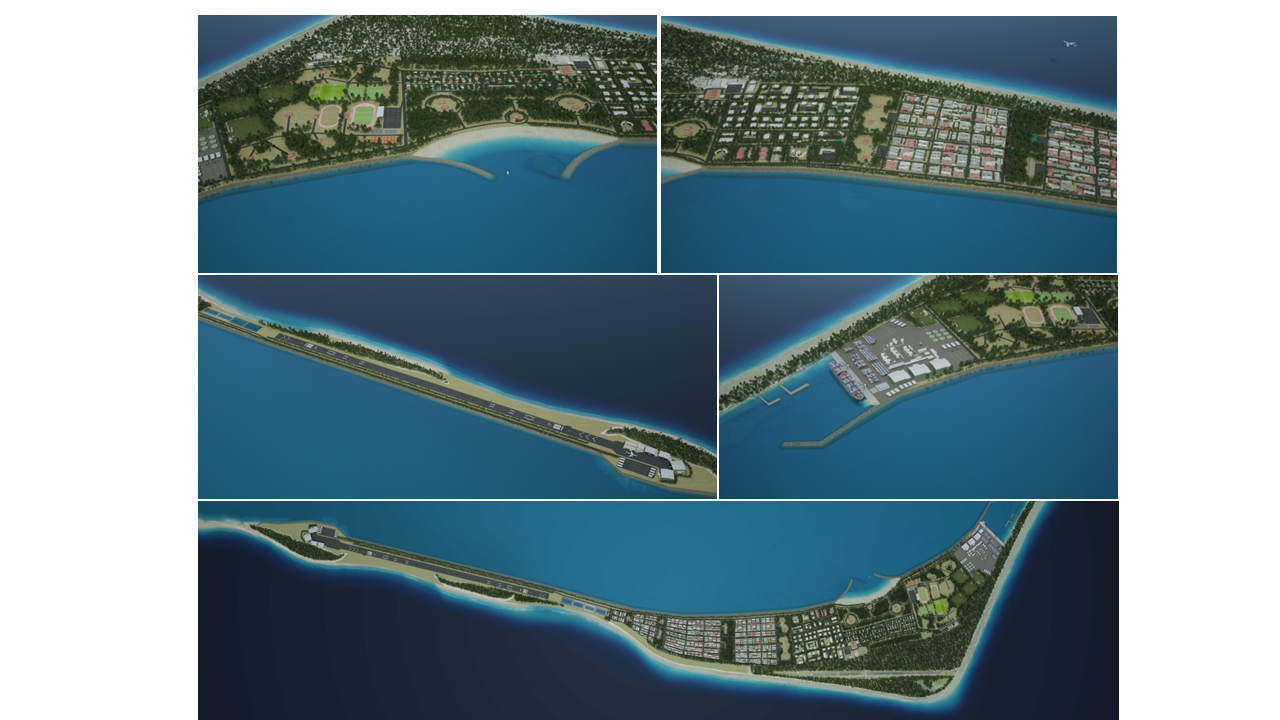
Concept visualisations developed as part of the Tuvalu Long-Term Adaptation Plan, exploring a long-term pathway for climate-resilient land, infrastructure and development.
Planning for Tuvalu’s Long-Term Future
Tuvalu’s Long-Term Adaptation Plan (L-TAP) explores how the country can respond to increasing climate and sea-level rise risks over the long term, looking beyond individual infrastructure projects towards a broader pathway for national adaptation.
Intercoastal contributed coastal engineering and climate adaptation expertise to the preliminary feasibility study, supporting investigation of the technical considerations associated with long-term adaptation and the creation of resilient land.
The work supports understanding of how large-scale adaptation could respond to long-term climate risk while accommodating future infrastructure and development needs.
Project Highlights
Long-term adaptation
Planning beyond individual coastal protection projects
Resilient land
Exploring options for future land and infrastructure
Preliminary feasibility
Assessing the technical basis for long-term adaptation
2023–2025
Project period
Responding to Long-Term Sea-Level Rise
As a low-lying atoll nation, Tuvalu faces significant long-term challenges from sea-level rise, coastal flooding and increasing pressure on already limited land.
L-TAP considers adaptation at a scale and timeframe beyond conventional coastal protection, examining how resilient land and infrastructure could support Tuvalu’s communities into the future.
The preliminary feasibility work helps establish the technical considerations associated with these long-term adaptation concepts and provides a foundation for further planning and investigation.
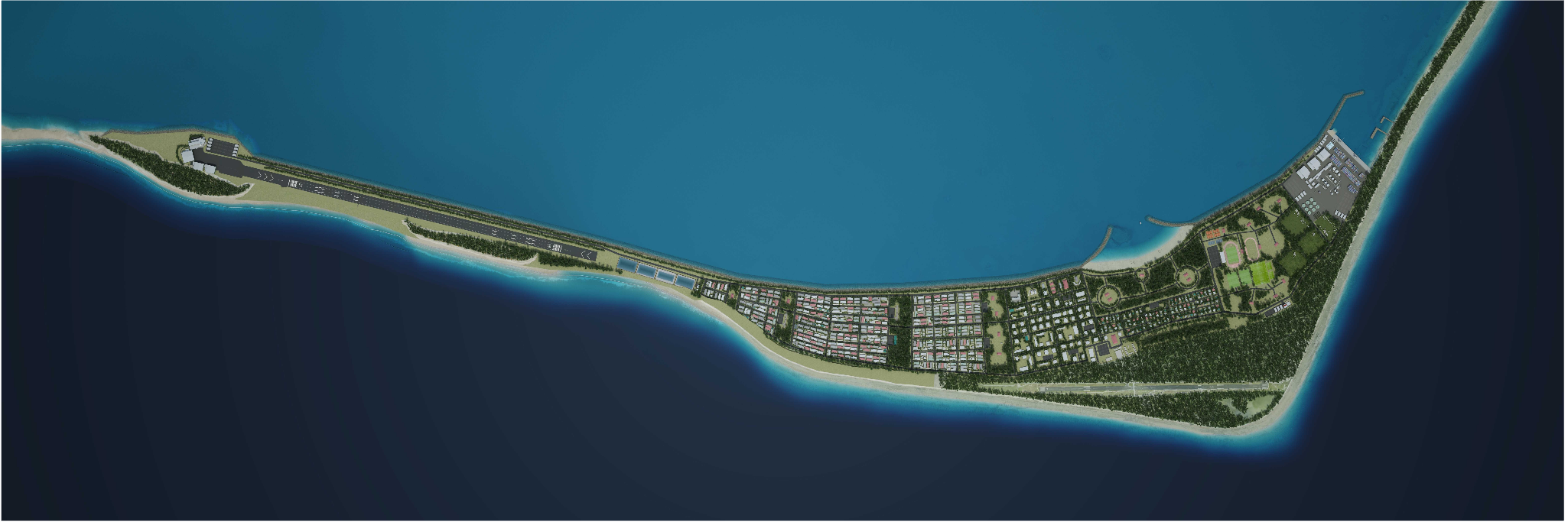
Concept visualisation exploring potential future land, infrastructure and development as part of long-term adaptation planning for Funafuti.
Exploring Adaptation at an Island Scale
The L-TAP preliminary feasibility study considers the interaction between coastal processes, land creation, infrastructure and future development.
Rather than treating these elements independently, the work supports consideration of how they could function together within a long-term adaptation pathway.
This island-scale perspective is particularly important in Tuvalu, where limited land availability and exposure to coastal hazards mean decisions about protection, development and future land use are closely interconnected.
Supporting a Long-Term Adaptation Pathway
The preliminary feasibility study provides technical input to a much longer process of adaptation planning.
By examining the feasibility and implications of large-scale adaptation concepts, the work provides technical information to support future decision-making and a foundation from which concepts can be progressively investigated and refined.
Intercoastal’s Role
Intercoastal provided coastal engineering and climate adaptation expertise to support the preliminary feasibility assessment of Tuvalu’s Long-Term Adaptation Plan.
The work contributed technical input to the investigation of long-term adaptation concepts and the consideration of resilient land and infrastructure in response to future climate and sea-level rise risks.
Project Details
Client: United Nations Development Programme (UNDP)
Location: Funafuti, Tuvalu
Project period: 2023–2025
Services: Coastal Engineering · Climate Adaptation & Resilience
